
There is a moment—usually somewhere between the airport expressway and the first police-registration form—when every foreigner in China realizes he has made a serious administrative mistake.
You arrive carrying a passport, two shirts, a bottle of duty-free whisky and the dim colonial fantasy that the world will continue obeying rules you recognize. Then the taxi driver shoots across six lanes of Beijing traffic while screaming into his phone, watching a historical drama mounted beside the steering wheel and spitting sunflower-seed shells into a paper cup.
Nobody dies.
This is your first lesson.
The second comes at the government office.
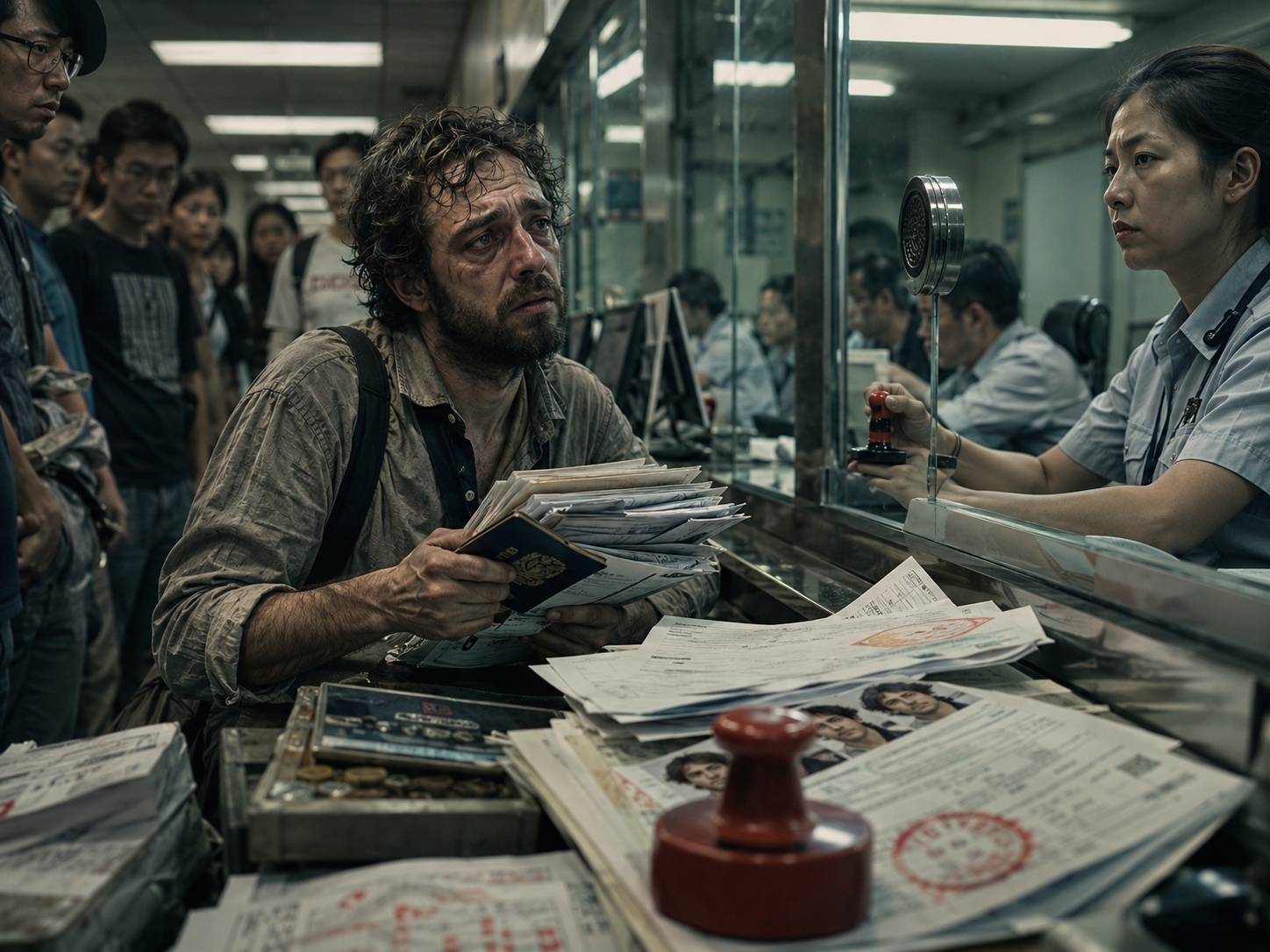
China has raised bureaucracy beyond mere administration. It is ritual combat. You enter beneath white fluorescent tubes carrying every document you possess, plus several you forged spiritually during the taxi ride. Behind the glass sits a woman with the absolute authority to ruin your month before lunch.
She takes your passport.
She examines it as if it were recovered from the stomach of a dead spy.
“Copy.”
You have a copy.
“Not this copy.”
The wrong copy. Jesus. There are dozens of species. Passport copies, visa copies, entry-stamp copies, work-permit copies, landlord-ID copies, lease copies, stamped copies, color copies, copies enlarged to 120 percent for reasons buried with the last emperor.
You return three hours later with a folder thick enough to stop a pistol round.
Now you need a photograph.
White background. No glasses. No smile. Both ears visible. Correct dimensions. Correct forehead. Correct soul.
The camera rejects your face.
The clerk does not.
She stamps the paper and sends you to another building.
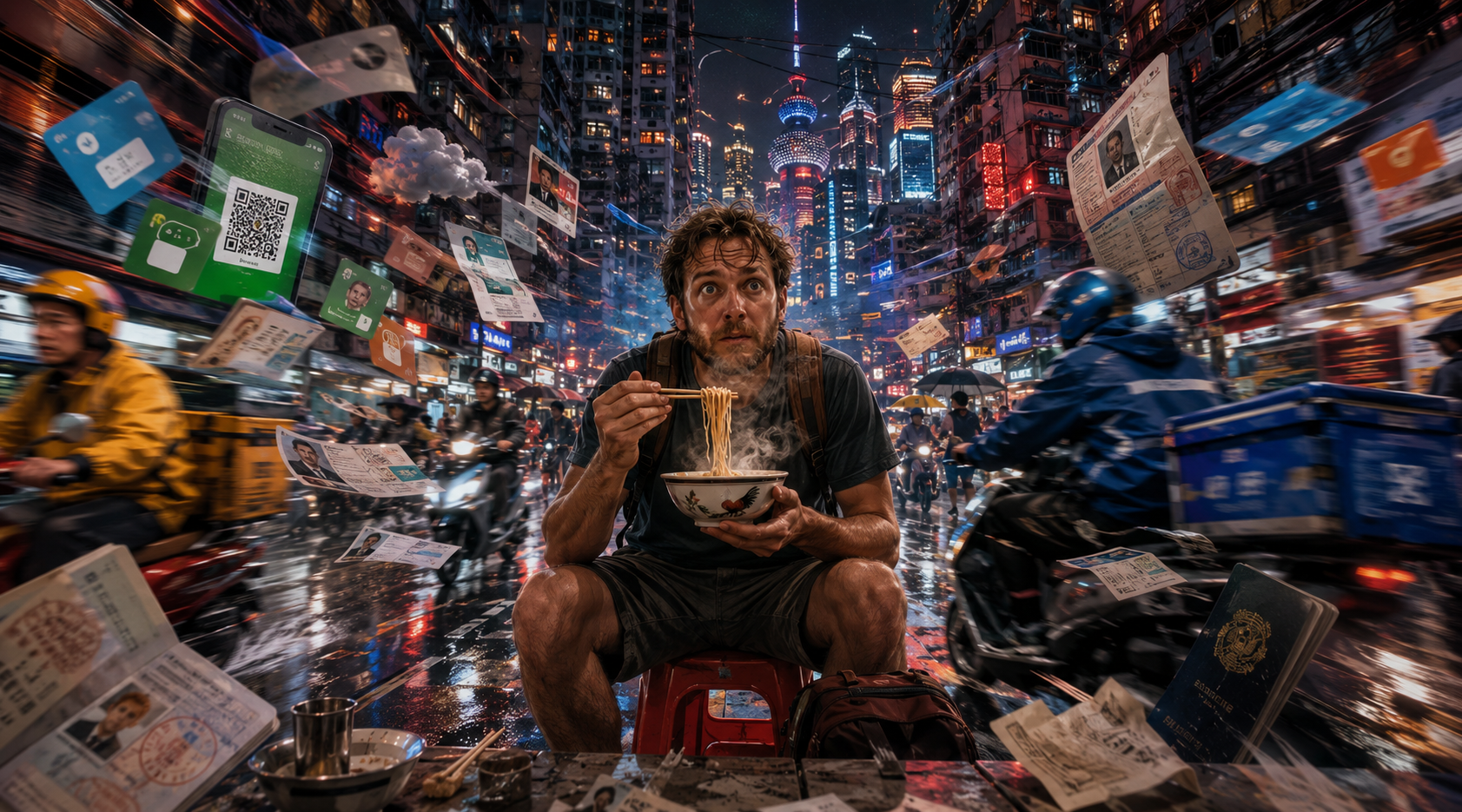
By the end of the first year, the competent foreigner travels like a minor intelligence officer. Passport photos in every coat. Scans in three clouds. Contracts sealed in plastic. Phone numbers for men named Visa Mike, Visa Kevin, Real Visa Kevin and Kevin New Number Don’t Use Old One.
Then there is WeChat.
WeChat is not an app. It is the bloodstream. The state may recognize your passport, but China recognizes the little green icon on your phone.
You pay the landlord with it. You book hospitals with it. You buy dumplings, electricity, train tickets, medicine, movie seats and suspicious fruit from a man broadcasting live from Guangxi. Your boss sends instructions through it at 11:47 p.m. Your daughter’s school sends forty-seven photographs through it before breakfast. Your building manager uses it to announce that the water has been shut off after the water has been shut off.
Lose WeChat and you become a ghost wandering through a cashless empire, waving banknotes like Confederate currency.
The food system alone is enough to derange a Western mind.
You tap a screen. Seventeen minutes later, a man arrives through freezing rain carrying noodles, cigarettes, iced coffee and a birthday cake on an electric motorcycle held together by tape and fatalism.
He calls.
“喂?”
You understand nothing.
“马上,” you say.
Immediately.
This is a lie. You are barefoot, the elevator is on the twenty-third floor and the delivery man has begun shouting your apartment number into the lobby with the fury of a betrayed creditor.
Foreigners arrive with ambitions.
They will learn Mandarin. Read the classics. Study calligraphy. Understand five thousand years of civilization.
Six months later they are in a convenience store at midnight, drunk and enraged because the self-checkout machine will not accept a foreign passport.
This is how China strips a man down to the machinery.
Certainty is punished. Systems mutate overnight. The bank has a new app. The app needs facial recognition. Facial recognition believes your face belongs to nobody. The security guard looks at the phone, looks at your actual face and laughs so hard he must sit down.
No malice. Pure professional amusement.
Privacy is treated with similar suspicion.
A stranger may ask your age, weight, salary, rent, marital status and reproductive plans before asking your name. Old women will slap your stomach and announce that you are strong. Men in elevators will photograph you with the flash on. Children will shout “外国人!” as if a giraffe has boarded the subway.
Eventually you stop reacting.
This is called integration.
The maddening part is that the machine works.
Twenty million people wake up and the city moves. Subway doors open. Baozi steam on street corners. Packages cross a thousand kilometres overnight. A cracked phone screen is replaced while you eat lunch. A road disappears on Tuesday and returns on Thursday with trees planted along it.
Chaos is everywhere, but it has appointments.
You learn the vocabulary of survival.
“Maybe” means no.
“We will consider it” means no.
“It should be fine” means nobody knows.
“Very convenient” means download two apps, register with a Chinese ID card you do not possess, scan your face, scan the building, scan the moon and return during business hours with the original copy of a document nobody mentioned.
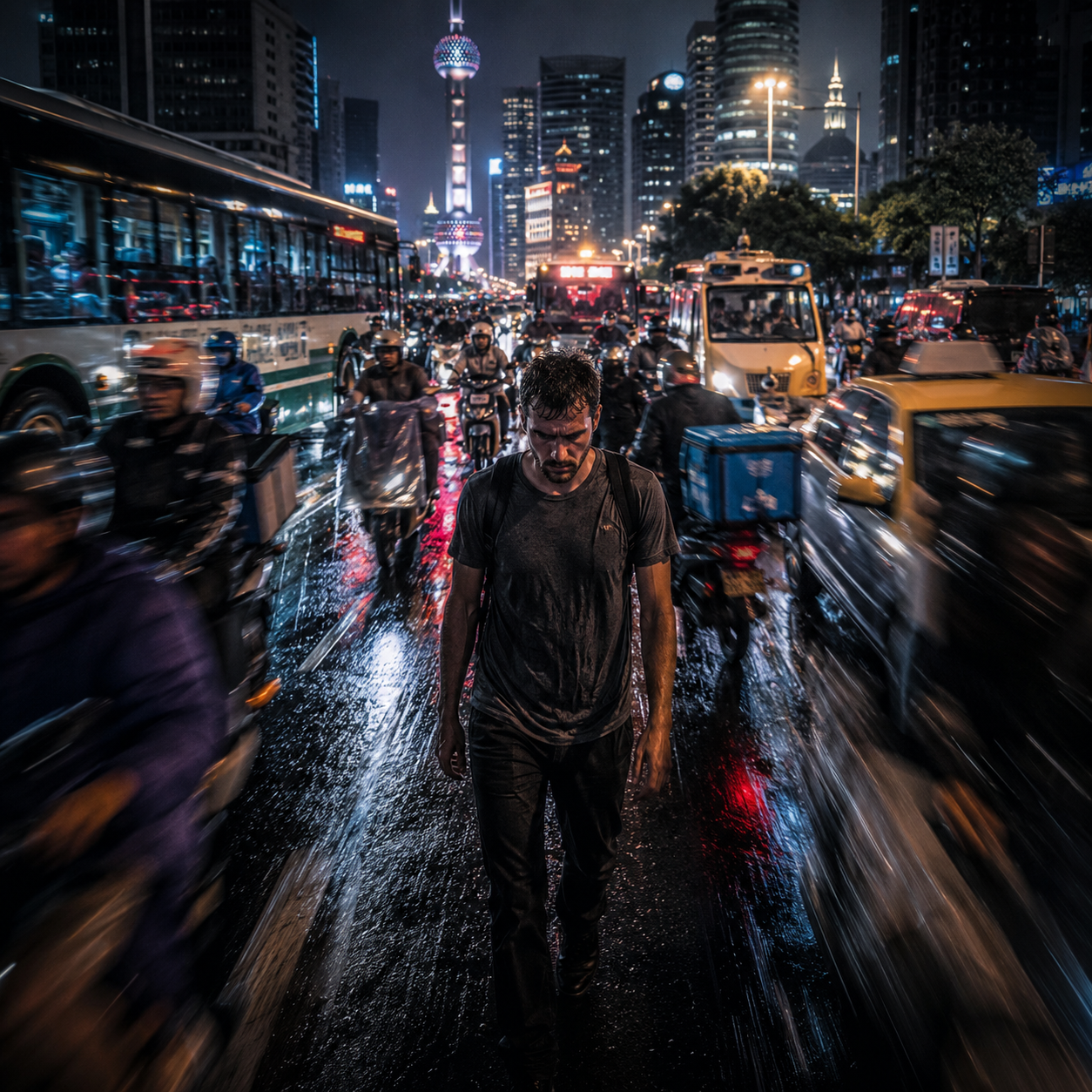
Crossing the road requires faith. Traffic does not stop. It bends.
You step into six lanes of buses, scooters, taxis, delivery riders and elderly men driving agricultural machinery through downtown Shanghai. Hesitation marks you as prey. Walk at a steady pace and the river parts around you.
Usually.
The same technique works in meetings.
Years pass before you notice the infection.
The shouting downstairs no longer sounds hostile. The aunties dancing in the square are part of the weather. The old man smoking beneath the NO SMOKING sign has become an architectural feature. The courier knows when you are home. The security guard who demanded your passport every morning now waves you through without looking up from his phone.
Then you visit your home country.
Disaster.
The restaurant wants a plastic card.
The bank transfer takes three business days.
The pharmacy closes at six.
The taxi costs more than the flight.
A package is scheduled to arrive sometime between Tuesday morning and the collapse of Western civilization.
You stand at the counter tapping your phone against a payment terminal like a lunatic trying to communicate with farm equipment.
Nobody understands.
This is when you discover that China has damaged you permanently.
Your standards have been recalibrated. Your patience has been boiled away. Your phone contains nineteen apps with red-and-gold icons, all demanding updates and permissions. You can order hotpot at 3 a.m. but cannot explain your address to your own relatives without opening a map.
You complain about China constantly. This is mandatory. The traffic, the paperwork, the noise, the blocked websites, the landlords, the meetings, the meetings about the previous meetings.
You swear you are leaving.
Everybody swears they are leaving.
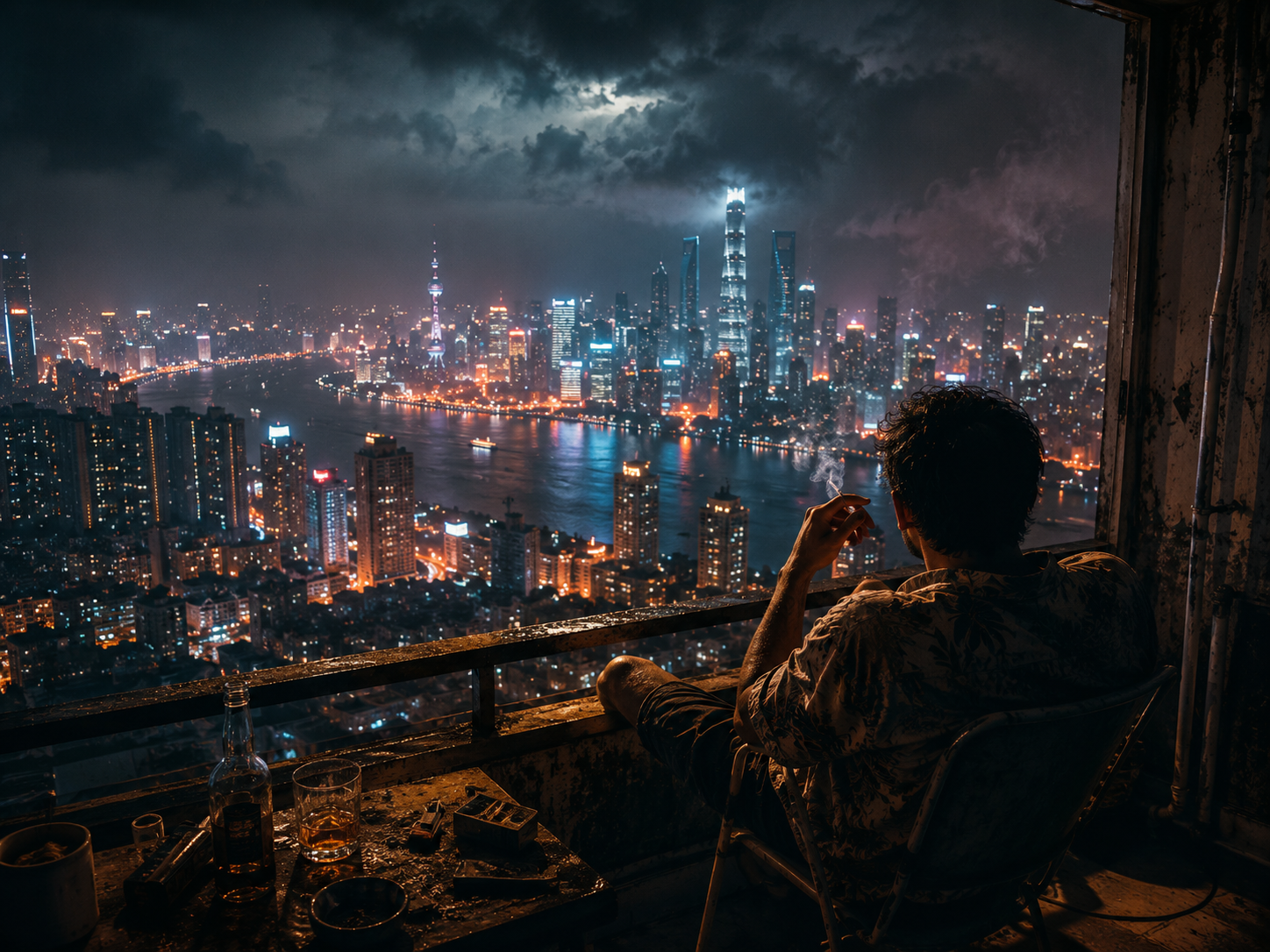
Then night falls. Rain shines on the pavement. Electric scooters slide past beneath red signs. Somebody is frying lamb skewers under a bridge. A train screams overhead. The city is filthy, electric and awake.
You sit on a plastic stool eating noodles from a metal bowl while a demolition crew works nearby for no defensible reason.
And it feels right.
That is the disease.
You came looking for opportunity, adventure, money, escape or some half-formed Eastern revelation sold by a paperback in an airport bookstore.
What you found was speed.
Raw, exhausting, ridiculous speed.
After enough years, ordinary life feels unbearably slow.